Mānava
- A speculative AI health companion that speaks biometric data in the voice of a humpback whale
GitHub: https://github.com/ystyao/manava
Self-tracking technologies promise self-knowledge, but they produce a particular kind of body: one that is legible as scores, comparable across days, and always open to optimization. The wearable does not simply measure health; it trains its wearer to experience rest, stress, and recovery as performance. Mānava (Tongan for breath and heartbeat) intervenes in this regime of datafication by changing who speaks the data, and in what register.
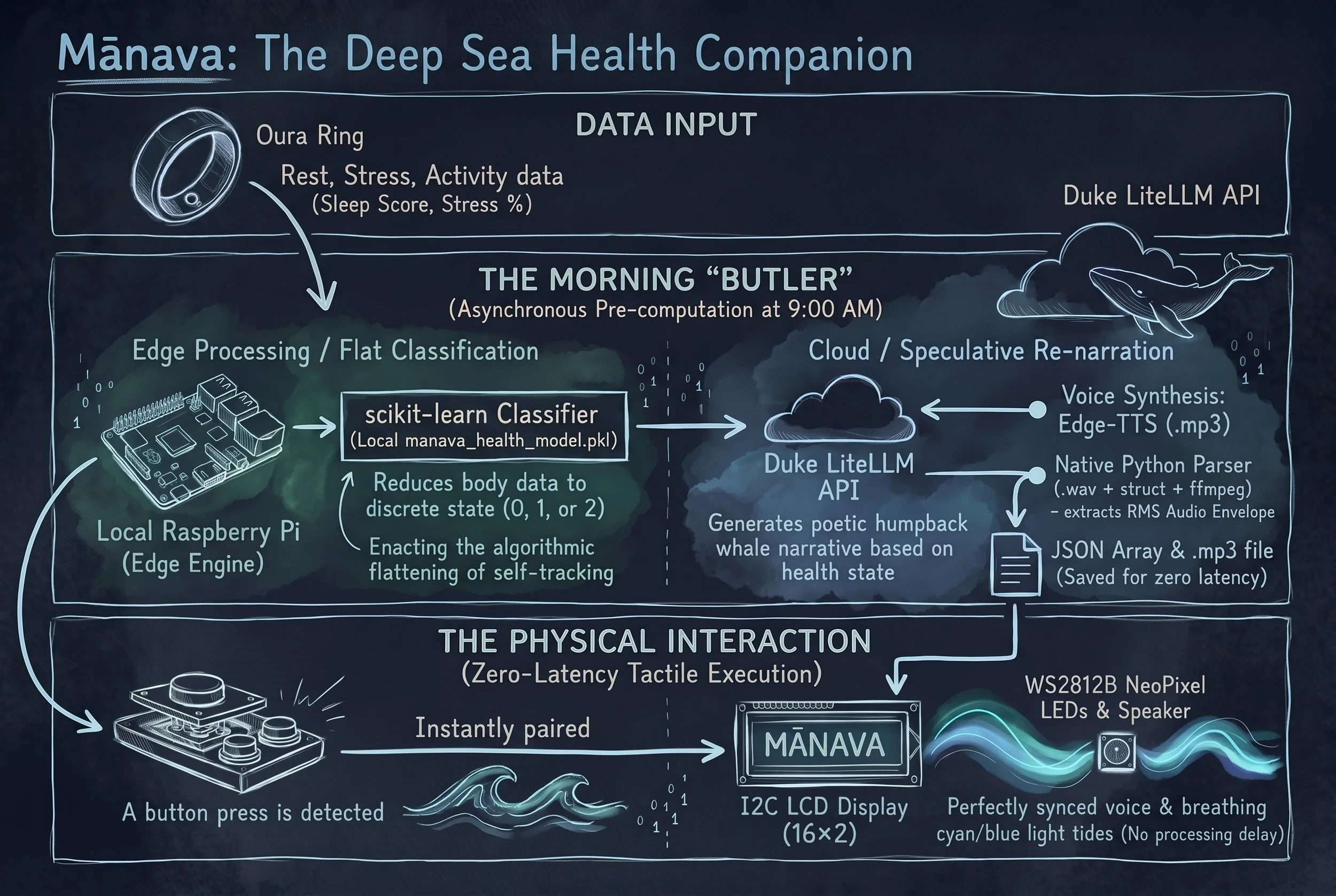
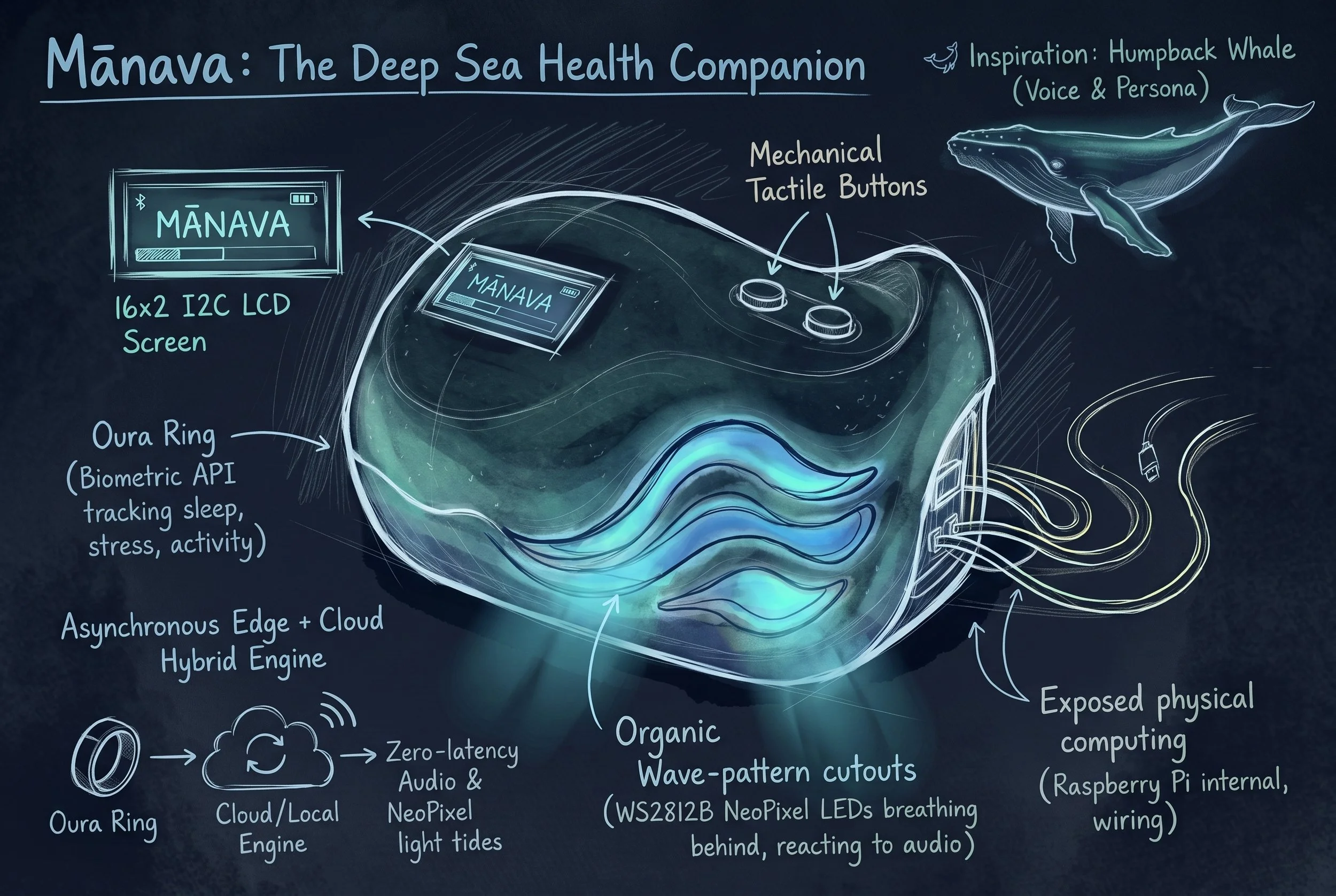
The work takes sleep, stress, and activity data from an Oura Ring and gives its interpretation to a humpback whale from the Tongan waters. The whale’s reflections arrive as deep-sea narratives, accompanied by light that rises and falls with its voice. The aim is not to hide the data or make it more pleasant to consume. It is to translate it into a temporality that the metrics of productivity cannot hold: the slow time of breath, migration, and the ocean, where the body is understood as part of a rhythm rather than a project to optimize.
The system makes this tension explicit in its own architecture. A locally trained machine-learning classifier reduces the body to one of three discrete health states, enacting the same flattening that commercial self-tracking performs. A language model then re-narrates that classification in the whale’s voice. The project stages the gap between algorithmic categorization and narrative meaning-making, leaving open whether the whale softens the classifier’s judgment or exposes how reductive it was. The physical form is deliberately screen-minimal, so the data is encountered through sound and light rather than read off a dashboard.
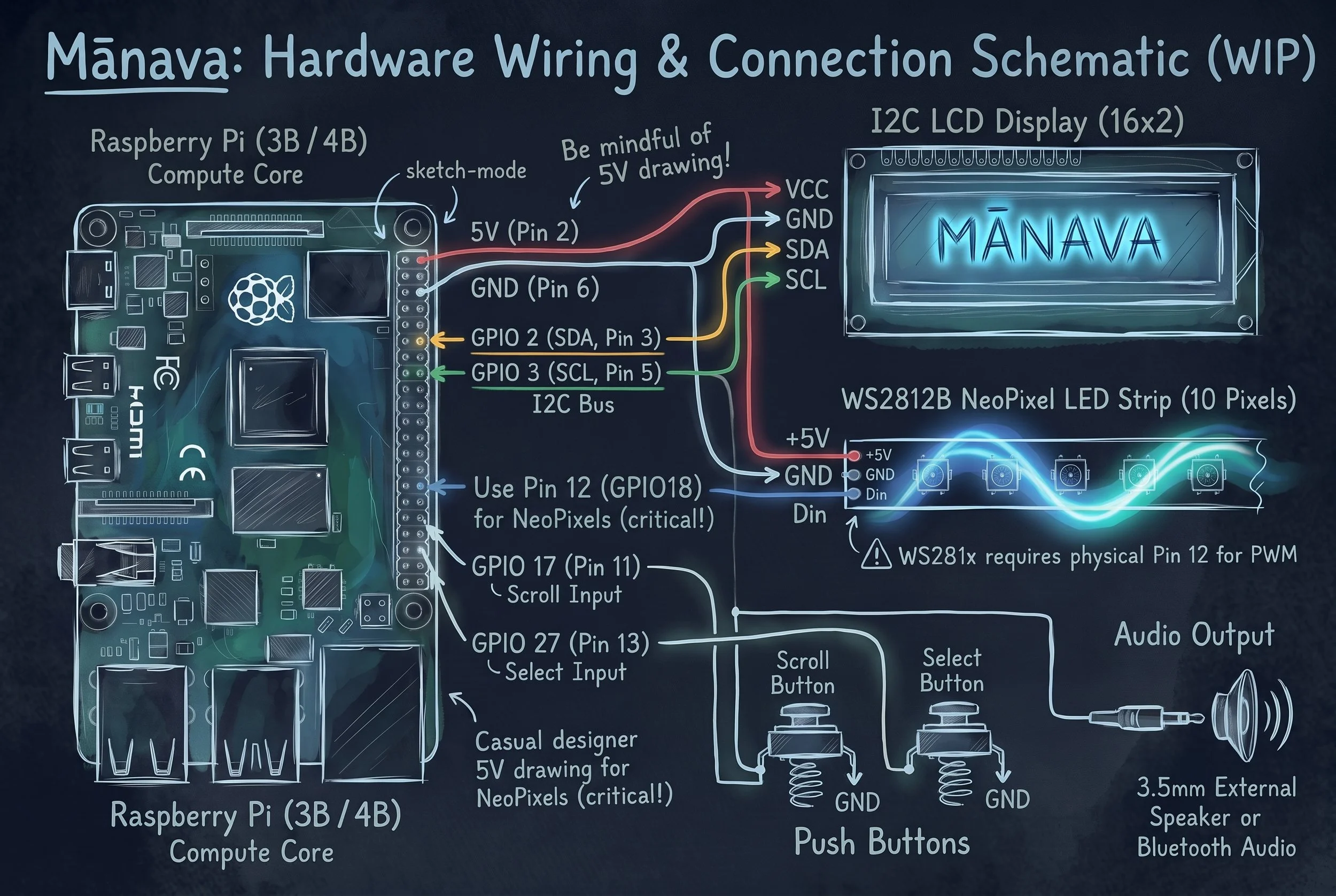
Mānava’s electronic hardware and enclosure are currently being reworked, so the documentation video is still in progress.
Tools: Raspberry Pi, Oura Ring, WS2812B NeoPixels, I2C LCD, Python, scikit-learn, Duke LiteLLM API, Edge-TTS
Context: Final individual project, AIPI590 Advanced Topics in AI for Product Innovation - AI in the Physical World (2026)